Pioneer Woman Prime Rib Roast Recipe

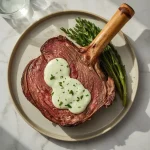
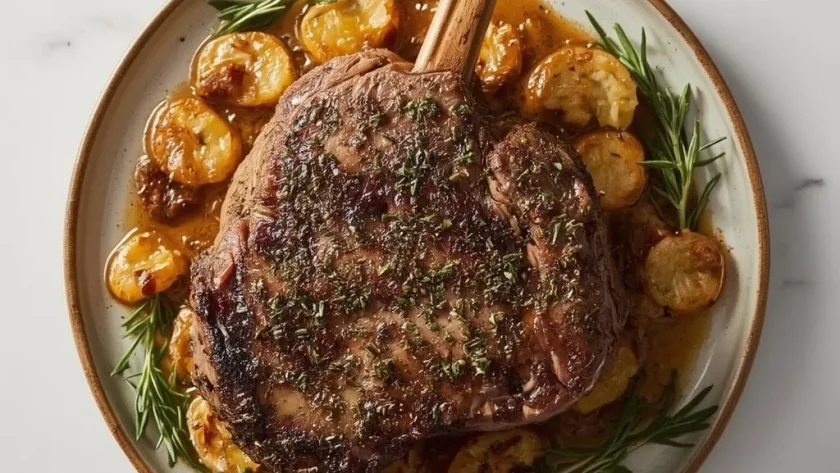
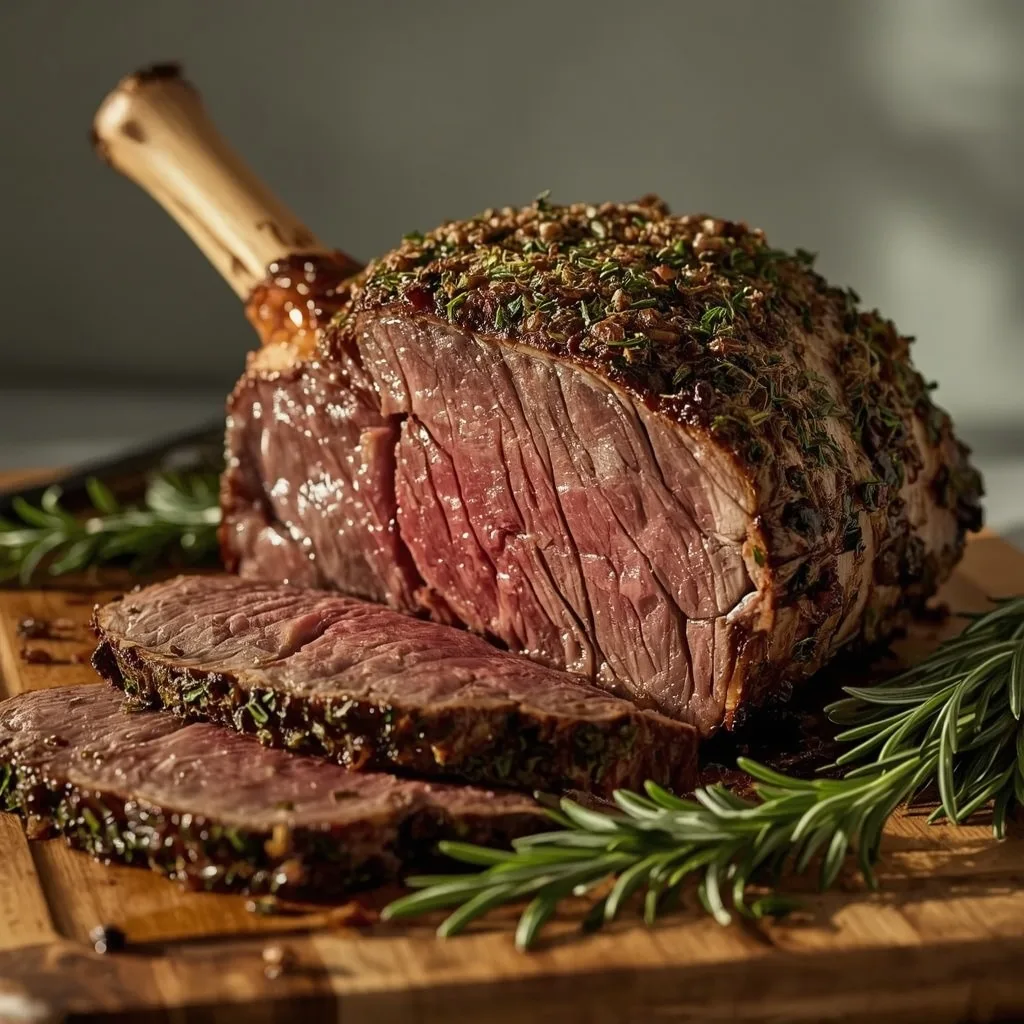
There’s something undeniably special about a perfectly cooked Pioneer Woman Prime Rib Roast. This bone-in roast, coated in a fragrant herb and garlic crust, delivers a deeply browned, crisp exterior while the inside stays tender, juicy, and evenly pink from edge to center.
This is the kind of dish you bring out for the biggest celebrations — Christmas dinner, New Year’s Eve, or a milestone birthday. With about 2 hours of total time from prep to plate, it’s actually simpler than its impressive reputation suggests. The key ingredients are straightforward (beef, herbs, garlic, olive oil), and the method is classic American roasting.
What is Pioneer Woman Prime Rib Roast?
This is a bone-in prime rib roast seasoned with a thick paste of fresh rosemary, thyme, garlic, salt, pepper, and olive oil. It gets a quick blast at 500°F to sear the outside, then finishes low and slow at 325°F until medium-rare. The result is a crusty, herbaceous exterior and a buttery-soft, rosy interior with rich beefy flavor throughout.
Why You’ll Love This Recipe
- Foolproof method — The high-heat sear followed by slow roasting removes the guesswork. You get a crisp crust and even doneness without constant monitoring.
- Minimal hands-on time — After rubbing on the paste, you only touch the roast twice: putting it in the oven and pulling it out. The oven does the work.
- Restaurant-quality results — The herb-garlic crust looks and tastes like something from a steakhouse. Your guests will think you slaved all day.
- Plenty of leftovers — A 4-pound roast serves 4 generously, with enough left for sandwiches, salads, or steak and eggs the next day.
- Temperature flexibility — The method works for medium-rare through medium-well. Just pull the roast 5°F earlier for a more done center.
- Simple ingredients — No hard-to-find items. Rosemary, thyme, garlic, and olive oil are pantry staples for most home cooks.
Essential Ingredients for Pioneer Woman Prime Rib Roast
Seven ingredients is all it takes to make this roast shine. Here is what each one does and what to look for when shopping.
- 1 (4-pound) bone-in prime rib roast — The star. Bone-in adds flavor and prevents the meat from overcooking as quickly. Look for bright red meat with creamy white fat marbling. Ask your butcher to leave the bones attached and trim the fat cap to about 1/4 inch.
- 2 tablespoons kosher salt — Kosher salt has larger crystals that adhere well to the meat and dissolve slowly. Do not use table salt — it is too fine and will make the roast overly salty.
- 1 tablespoon freshly ground black pepper — Freshly ground pepper adds a bright, pungent kick that pre-ground pepper lacks. Grind it coarse for texture.
- 4 cloves garlic, minced — Fresh garlic is non-negotiable here. Do not use jarred minced garlic — it is less flavorful and can burn during the high-heat sear. Mince it finely so it blends into the paste.
- 2 tablespoons fresh rosemary, finely chopped — Rosemary brings an earthy, pine-like aroma that stands up to the beef. Dried rosemary will not give the same intensity. Chop the leaves very fine to avoid tough bits.
- 2 tablespoons fresh thyme leaves — Thyme has a subtle lemony-herb note that complements rosemary without overpowering it. Strip the leaves from the stems and discard the woody parts.
- 2 tablespoons extra-virgin olive oil — The oil binds the paste and helps it stick to the roast. It also aids browning during the initial sear. Use a good-quality olive oil, not light or vegetable oil, for the best flavor.
Equipment You’ll Need
You likely already own most of these. A few specialty items make the job easier and safer.
- Rimmed baking sheet — Used during the resting-out-of-the-fridge step. Catches any drips and keeps the roast elevated slightly on a wire rack. A sheet pan with raised edges works perfectly.
- Roasting pan with a rack — The rack lifts the roast so hot air circulates underneath, browning the bottom evenly. Without a rack, the bottom steams in rendered fat. If you do not have a rack, crumple foil into coils and place the roast on top.
- Instant-read thermometer — Essential for accurate doneness. A probe thermometer that stays in the roast while cooking is even better. Do not rely on the oven timer alone — every roast cooks differently.
- Aluminum foil — Used to tent the roast during resting. This allows the internal temperature to carry over 5-10°F without losing too much heat. Heavy-duty foil is best for strength.
- Sharp carving knife — A long, thin knife (at least 8 inches) makes clean slices through the roast without shredding the meat. A bread knife can work in a pinch but tends to tear the crust.
Instructions to Make Pioneer Woman Prime Rib Roast
These ten steps are the exact method from the original recipe. Follow them in order, and do not skip the resting step — it is crucial for juicy slices.
- Let the roast rest out of the fridge — Remove the roast from the refrigerator 1 to 2 hours before cooking and leave it uncovered on a rimmed baking sheet. This brings the meat to room temperature so the center cooks at the same pace as the outside.
- Preheat the oven and pat dry — Set the oven to 500°F (260°C) with the rack in the center. Pat the roast completely dry with paper towels. Any moisture on the surface will steam instead of sear, preventing that deep brown crust.
- Make the herb paste — In a small bowl, mix the salt, pepper, minced garlic, chopped rosemary, thyme leaves, and olive oil until it forms a thick paste. The salt helps the garlic and herbs stick and draws out a tiny bit of moisture to create the crust.
- Rub the paste all over — Coat every surface of the roast, including the sides and any exposed bones. Press firmly onto the fat cap so the paste stays in place during the initial high heat.
- Set it on a rack in the roasting pan — Place the roast fat-side up on a rack inside a roasting pan. The rack allows hot air to circulate, browning the bottom and letting rendered fat drip away.
- Sear at 500°F for exactly 15 minutes — Roast at 500°F for exactly 15 minutes without opening the oven door. This blast sears the exterior, creating that crisp, deeply browned crust that traps the juices inside.
- Reduce heat and roast to temperature — Without opening the door, lower the oven to 325°F (163°C) and continue roasting until the internal temperature at the thickest part (away from the bone) reaches 125°F (52°C) for medium-rare. This takes about 1 to 1½ hours — roughly 15 minutes per pound after the initial sear. Start checking at the 45-minute mark.
- Rest the roast — Remove the pan from the oven and tent loosely with foil. Let it rest 20 to 30 minutes. The internal temperature will rise another 5-10°F (3-5°C) to a perfect 130-135°F (54-57°C), and the juices will redistribute evenly.
- Carve carefully — Transfer the roast to a cutting board. Slice the meat away from the bones in one piece, then slice the boneless roast against the grain into ½-inch thick slices. The bone-in section can be cut into individual ribs.
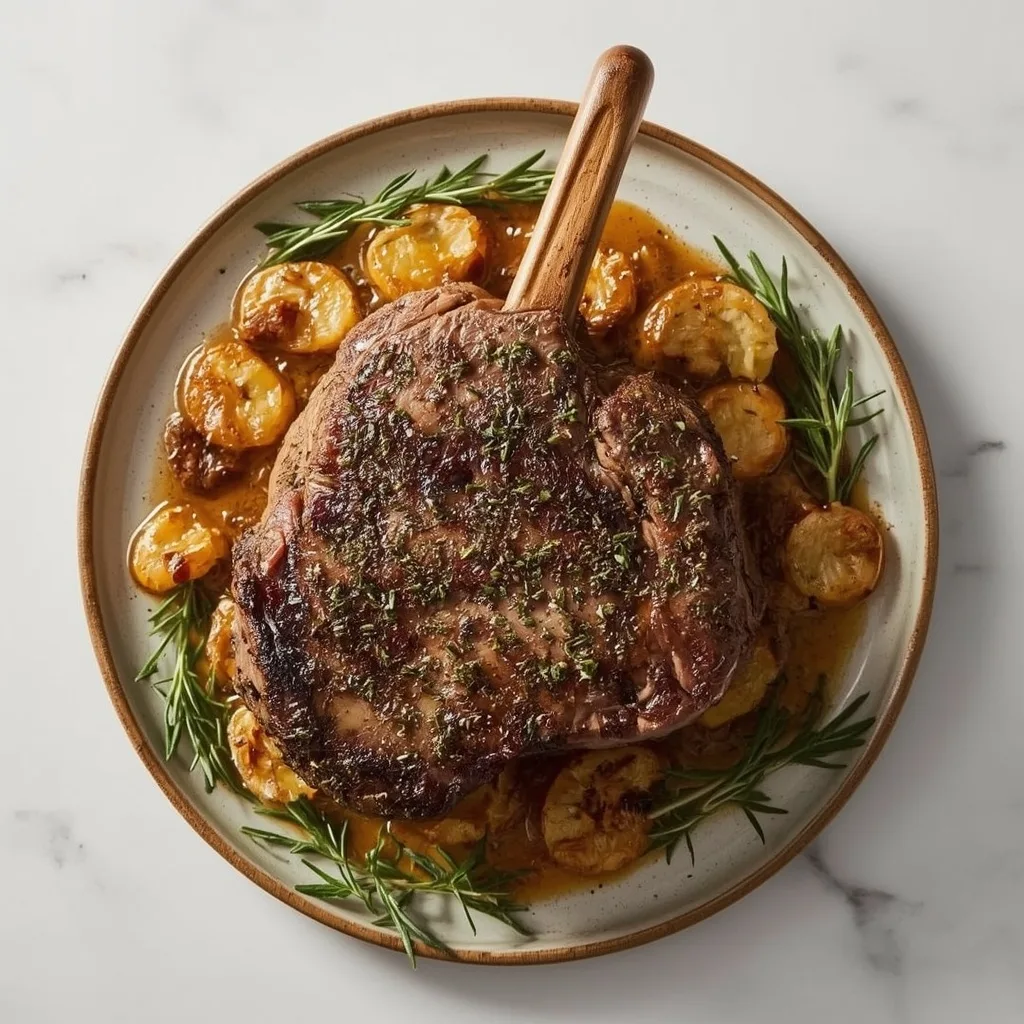
- Serve with pan juices — Arrange the slices on a warm platter and spoon any accumulated juices from the roasting pan over the top. These juices are intensely beefy and add moisture and flavor to every bite.
Common Mistakes I Made (And How I Fixed Them)
Here is what tripped me up the first few times I made this recipe. Each one taught me something important.
- Taking the roast straight from fridge to oven — The center stayed cold while the outside overcooked. Now I always let it sit out for at least 1 hour before roasting. The difference in evenness is dramatic.
- Skipping the paper towel pat-down — The paste slid off during the sear because the meat was damp. Now I pat it bone-dry before rubbing. The crust stays intact and browns beautifully.
- Opening the oven during the sear — I peeked at the 10-minute mark to check, and the temperature dropped enough that the crust never got crisp. Do not open the door at all during those 15 minutes. Trust the process.
- Using a dial thermometer instead of instant-read — The dial thermometer lagged behind the actual temperature, and I pulled the roast when it was already overdone. An instant-read thermometer gives you a real-time reading in seconds.
- Carving too soon after removing from oven — I sliced right away and a puddle of juice flooded the cutting board. Now I wait a full 20 minutes under foil. The meat stays moist and every slice holds its shape.
Best Tips for Pioneer Woman Prime Rib Roast Success
A few simple strategies make the difference between a good roast and a great one. These tips will help you avoid the common pitfalls.
- Salt the roast a day ahead (optional but great) — If you have time, rub the salt on the roast and refrigerate uncovered overnight. Let the salt penetrate for deeper seasoning and a drier surface for better browning.
- Invest in a probe thermometer with an alarm — Set it for 120°F if you prefer medium-rare, 125°F if you want closer to medium. The alarm lets you walk away without worrying about overcooking.
- Let the roast sit completely uncovered after salting — Do not wrap it in plastic or foil. The exposed surface dries out slightly, which helps the crust form faster during the sear.
- Pull the roast 5°F before your target temperature — Carryover cooking continues during the rest. If you want 135°F at serving, remove the roast at around 128-130°F. This prevents overshooting.
- Use a carving board with a channel — The juices that pool during slicing are gold. A channel catches them so you can spoon them over the meat. If your board is flat, place a lipped baking sheet underneath.
- Warm your serving platter — Put the platter in the oven at the lowest setting (around 170°F) for a few minutes just before carving. Cold plates cool the meat fast and kill the presentation.
- Slice only as much as you will eat immediately — Leftover slices cut from the whole roast dry out faster. Carve what you need, then wrap the remaining roast tightly and refrigerate. Slice again after reheating.
Best Ingredient Swaps for Pioneer Woman Prime Rib Roast
Sometimes you are out of something or want a different flavor profile. These swaps keep the integrity of the dish intact.
- Dried herbs for fresh — Use 1 teaspoon dried rosemary and 1 teaspoon dried thyme instead of fresh. Reduce to a third of the fresh amount. The flavor is more muted but still good in a pinch.
- Garlic powder for fresh garlic — Replace the 4 minced cloves with 1½ teaspoons garlic powder. Mix it with the salt and pepper before adding oil. The paste will be less pungent but still flavorful.
- Avocado oil for olive oil — Avocado oil has a higher smoke point, so it can handle the 500°F sear without burning. The flavor is neutral, letting the herbs and garlic shine.
- Boneless prime rib for bone-in — Use a 3-pound boneless roast instead of the 4-pound bone-in. Reduce the cooking time by about 10-15 minutes. The meat cooks faster without the bone conducting heat.
- Dijon mustard for oil (in the paste) — Replace the olive oil with 2 tablespoons Dijon mustard. Mustard adds tang and helps the herbs stick, though the crust will be less crunchy. It works surprisingly well.
- Fine sea salt for kosher salt — Use only 1½ tablespoons fine sea salt instead of 2 tablespoons. Fine salt is denser and saltier by volume. Adjust to taste if unsure.
Delicious Variations to Try
Once you have mastered the basic herb crust, these variations offer new flavors without complicating the method.
- Peppercorn crust — Add 1 tablespoon crushed black peppercorns and 1 teaspoon crushed pink peppercorns to the paste. The pepper forms a crackly coating that pairs beautifully with a red wine pan sauce.
- Horseradish-herb paste — Stir 2 tablespoons prepared horseradish into the oil before mixing with the herbs. The horseradish mellows during roasting and adds a subtle heat that cuts through the richness.
- Red wine and shallot infusion — Deglaze the roasting pan with ½ cup dry red wine and 2 minced shallots after removing the roast. Simmer 2 minutes and pour over the carved meat. This creates a quick, impressive jus.
- Garlic-rosemary butter finish — After resting, rub the roast with 2 tablespoons softened butter mixed with 1 minced garlic clove and ½ teaspoon chopped rosemary. The butter melts into the warm crust, adding richness.
- Smoked paprika and cumin rub — Substitute the rosemary and thyme with 1 tablespoon smoked paprika and 1 teaspoon ground cumin. The smoky, earthy notes work surprisingly well with beef and add a barbecue-like character.
How to Store Leftovers Properly
Leftover prime rib is a gift. Stored correctly, it stays delicious for days in the fridge or months in the freezer.
- Wrap tightly in plastic or aluminum foil — Press the wrap directly against the surface of the meat to prevent air from reaching it. Tightly wrapped slices last 3 to 4 days in the refrigerator without drying out.
- Freeze individual slices — Wrap each slice separately in plastic wrap, then place them in a single layer inside a freezer bag. Squeeze out excess air before sealing. Frozen slices keep for up to 2 months.
- Store the whole roast (unsliced) for best moisture — If you have a large leftover piece, wrap it whole rather than slicing first. The intact roast retains moisture much better than individual slices.
- Label and date the packaging — Use a marker to write the date on the bag or foil. It is easy to forget when you froze something, and beef can develop freezer burn after 2 months.
How to Reheat Pioneer Woman Prime Rib Roast
Reheating prime rib without drying it out requires gentle heat and a little moisture. Here are three reliable methods.
- Oven method (best for multiple slices) — Place slices in a single layer in a baking dish with a splash of beef broth. Cover tightly with foil and heat at 300°F (149°C) for 10 to 15 minutes. The broth creates steam that keeps the meat moist. Check at 10 minutes to avoid overheating.
- Stovetop method (for 1-2 slices) — Warm a skillet over medium-low heat with a teaspoon of oil or butter. Sear each slice for about 1 minute per side. This works well but can overshoot if you leave it too long. Flip as soon as the first side is warm.
- Microwave method (quick but less ideal) — Place slices on a microwave-safe plate, cover with a damp paper towel, and microwave on 50% power in 30-second bursts. The steam prevents drying, but the texture will be slightly less tender than the oven method.
Nutritional Breakdown (Per Serving)
This recipe serves 4 people. Here is the full nutrition per serving based on the ingredients listed.
- Calories — 1260
- Protein — 90g
- Fat — about 85g
- Carbohydrates — 1g
- Fiber — 0g
- Sugar — around 0g
- Sodium — 1500mg
FAQs
Can I make Pioneer Woman Prime Rib Roast ahead of time?
Yes. You can season the roast with the herb paste up to 24 hours in advance. Keep it uncovered in the refrigerator. Let it sit at room temperature for 1 hour before roasting as instructed.
Do I have to use a bone-in roast?
No, you can use a boneless prime rib, but the cooking time will be shorter. A boneless roast cooks about 10-15 minutes faster than the bone-in version. Check the internal temperature earlier, starting at the 30-minute mark after the sear.
What if I don’t have fresh rosemary and thyme?
Use dried herbs instead. Substitute 1 teaspoon dried rosemary and 1 teaspoon dried thyme for the fresh amounts. The flavor will be less vibrant but still pleasant. Do not skip the herbs entirely — they define the crust.
Can I freeze Pioneer Woman Prime Rib Roast after cooking?
Absolutely. Wrap individual slices tightly in plastic wrap, place them in a freezer bag, and freeze for up to 2 months. Thaw overnight in the refrigerator before reheating using the oven method listed above.
How do I know when the roast is done without a thermometer?
You really should use a thermometer for a large roast. Visual cues like pressing on the meat or checking the color of the juices are unreliable. An instant-read thermometer is the only way to guarantee medium-rare at 125°F internal temperature.
What sides go best with prime rib?
Creamy mashed potatoes, roasted asparagus, Yorkshire pudding, creamed spinach, and a simple arugula salad with lemon vinaigrette all work beautifully. The roast is rich, so keep sides light and tangy.
Try These Recipes
Final Words
The Pioneer Woman Prime Rib Roast is the kind of showstopper that makes any meal feel like an occasion. Between the crisp herb crust and the tender, juicy interior, it delivers everything you want from a special-occasion roast. I hope you give it a try for your next holiday dinner or celebration — it is simpler than it looks, and your guests will be thrilled.
Pioneer Woman Prime Rib Roast
A show-stopping bone-in prime rib roast with a fragrant herb and garlic crust, seared at high heat then slow-roasted to a perfect medium-rare. The exterior is deeply browned and crisp while the interior stays tender, juicy, and evenly pink from edge to center.
SAVE THIS RECIPE!
Get this sent to your inbox, plus get new recipes from us every week!
INGREDIENTS
INSTRUCTIONS
-
1
Remove the prime rib roast from the refrigerator 1 to 2 hours before cooking and let it sit uncovered on a rimmed baking sheet. This allows the meat to come to room temperature, which promotes even cooking and prevents the center from staying cold while the exterior overcooks.
-
2
Preheat the oven to 500°F (260°C) and position an oven rack in the center. While the oven heats, pat the roast dry with paper towels; moisture on the surface prevents browning and will steam instead of sear.
-
3
In a small bowl, combine the kosher salt, black pepper, minced garlic, chopped rosemary, thyme leaves, and olive oil, stirring until a thick paste forms. The salt will help the garlic and herbs adhere while drawing out just enough moisture to create a flavorful crust.
-
4
Rub the herb paste evenly over the entire surface of the roast, including the sides and any exposed bones. For the best flavor, press the paste firmly onto the fat cap so it sticks during the initial high-heat sear.
-
5
Place the roast fat-side up on a rack set inside a roasting pan. The rack elevates the meat so hot air circulates around it, ensuring the bottom browns and the rendered fat drips away rather than pooling.
-
6
Roast the prime rib at 500°F (260°C) for exactly 15 minutes. This high-heat blast sears the exterior, creating a crisp, deeply browned crust that traps the juices inside. Do not open the oven door during this time.
-
7
Without opening the oven door, reduce the oven temperature to 325°F (163°C) and continue roasting until the internal temperature at the thickest part of the meat (away from the bone) reaches 125°F (52°C) for medium-rare, about 1 to 1 1/2 hours (approximately 15 minutes per pound after the initial sear). Use an instant-read thermometer and begin checking at the 45-minute mark.
-
8
When the target temperature is reached, remove the roasting pan from the oven and tent the roast loosely with aluminum foil. Let it rest for 20 to 30 minutes; during this time the internal temperature will rise another 5 to 10°F (3 to 5°C) to a perfect 130 to 135°F (54 to 57°C), and the juices will redistribute throughout the meat.
-
9
After resting, transfer the roast to a cutting board. To carve, slice the meat away from the bones in one piece, then slice the boneless roast against the grain into 1/2-inch thick slices. The bone-in section can be cut into individual ribs if desired.
-
10
Serve the prime rib slices arranged on a warm platter, spooning any accumulated pan juices over the top. The juices are intensely beefy and will add moisture to each serving.
NUTRITION
Calories: 1260kcal | Carbohydrates: 1g | Protein: 90g | Fat: 85g | Sodium: 1500mg | Fiber: 0g | Sugar: 0g
Nutrition information is automatically calculated, so should only be used as an approximation.