
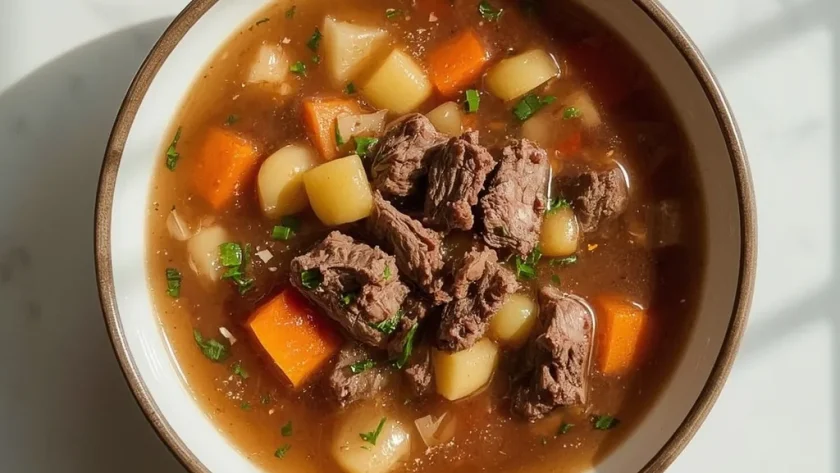
Pioneer Woman Prime Rib Soup Recipe

If you have leftover prime rib sitting in your fridge, this Pioneer Woman Prime Rib Soup is exactly what you need to turn it into something spectacular. The beef comes back to life in a rich, wine-kissed broth with tender vegetables and deep savory flavor.
It is the kind of soup you want on a cold evening or after a big holiday meal when you are craving comfort without much effort. From start to finish, this stovetop recipe takes about 50 minutes and uses simple American ingredients you likely already have.
What is Pioneer Woman Prime Rib Soup?
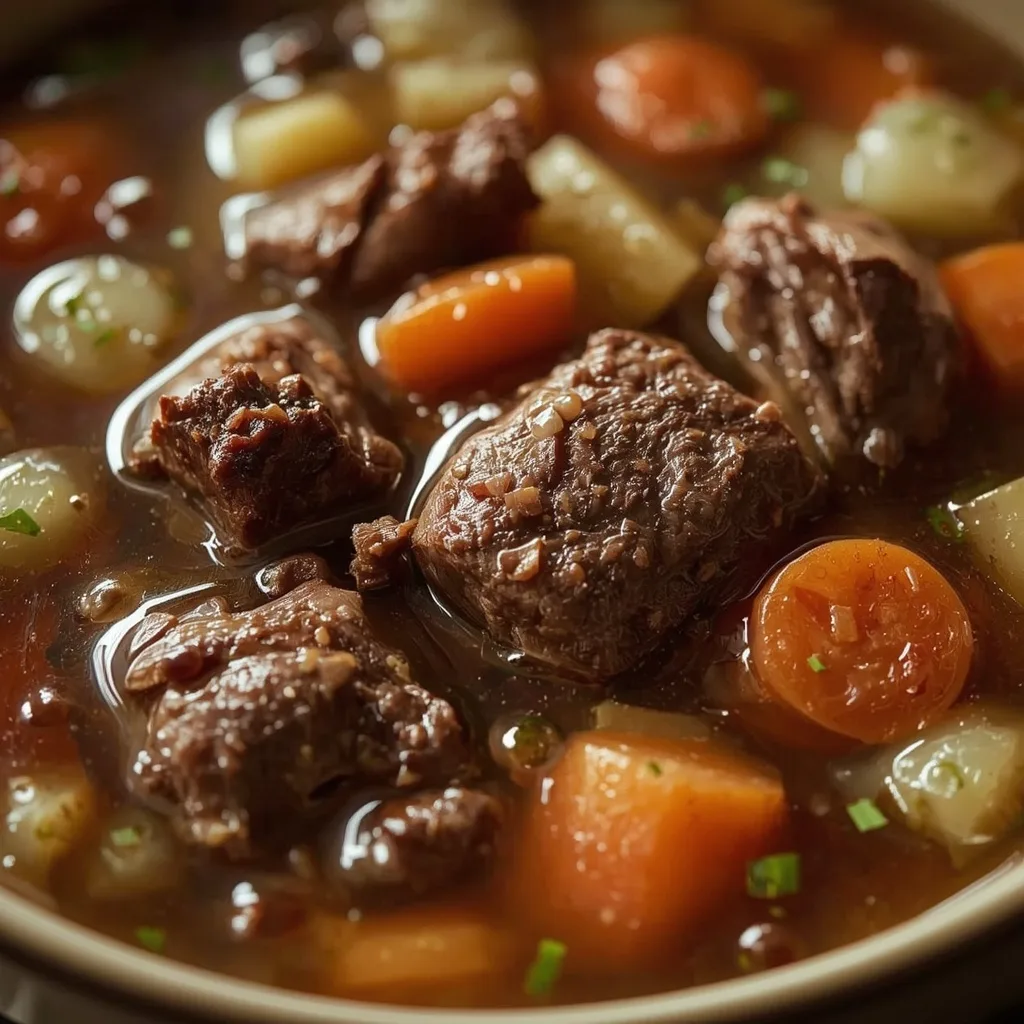
This soup starts with leftover roasted prime rib that gets seared again to build a rich fond on the pot bottom. Onions, carrots, and celery cook in that fond, then a splash of dry red wine deglazes everything before beef broth, Worcestershire, and bay leaves join the pot. The result is a deeply savory, hearty broth packed with tender beef and softened vegetables — every spoonful tastes like a warm hug.
Why You’ll Love This Recipe
- Uses leftovers brilliantly — That prime rib you worked so hard on gets a second life in a soup that feels brand new.
- Deep, complex flavor — Searing the meat twice and deglazing with red wine creates layers of richness you just cannot get from a quick broth.
- Quick to pull together — 15 minutes of prep and 35 minutes of cooking is all you need; most of that time is hands-off simmering.
- Customizable to your pantry — You can swap in different root vegetables, adjust the herbs, or add a splash of balsamic at the end without ruining the base.
- Freezer-friendly — Make a double batch and stash portions for busy weeknights when you want something satisfying fast.
- Naturally gluten-free — No flour or thickeners here, just pure meat-and-vegetable goodness that works for gluten-free eaters.
Essential Ingredients for Pioneer Woman Prime Rib Soup
Every ingredient here pulls weight — no fillers, no shortcuts. Here is what you need and why each one matters.
- 2 tablespoons olive oil — Use a good-quality olive oil for searing; it can handle medium-high heat without smoking and adds a subtle fruitiness.
- 1 pound cooked prime rib, cut into 1/2-inch cubes — Leftover prime rib is ideal, but any leftover roasted beef works. Cube it evenly so it heats through at the same rate.
- 1 large onion, diced (about 1 cup) — Yellow or sweet onion gives the base sweetness that balances the wine and broth. Dice it small for even softening.
- 2 carrots, peeled and diced (about 1 cup) — Carrots bring natural sweetness and a pop of color. Dice them the same size as the onion for uniform cooking.
- 2 celery stalks, diced (about 1/2 cup) — Celery adds that classic aromatic backbone. Do not skip it — it is crucial for depth.
- 3 cloves garlic, minced — Fresh garlic is non-negotiable here. Pre-minced jarred stuff tastes flat and less pungent.
- 1 teaspoon dried thyme — Thyme complements beef beautifully. If you have fresh, use 1 tablespoon of leaves, stripped from stems.
- 1/2 cup dry red wine, such as Cabernet Sauvignon — The wine deglazes the pot and adds acidity that cuts through the richness. Use something you would drink — cheap cooking wine tastes harsh.
- 6 cups low-sodium beef broth — Low-sodium lets you control the salt level. Regular broth can make the soup overly salty once reduced.
- 1 tablespoon Worcestershire sauce — This adds umami and a slight tang. It is a small amount but makes a big difference.
- 2 bay leaves — Bay leaves add an earthy, herbal note that develops during simmering. Remove them before serving — they are not edible.
- 1 teaspoon kosher salt — Start here and adjust at the end. Different broths have varying saltiness, so taste first.
- 1/2 teaspoon black pepper — Freshly ground black pepper gives a gentle heat that wakes up the other flavors.
- 2 tablespoons fresh parsley, chopped for garnish — Parsley adds freshness and brightness right before serving. Flat-leaf or curly both work.
Equipment You’ll Need
You do not need fancy gear, but the right pot makes a difference. Here is what gets the job done.
- A large Dutch oven or heavy-bottomed pot — A 5- to 6-quart Dutch oven holds heat evenly and is perfect for searing meat without scorching. A stainless steel pot with a thick base works too.
- Sharp chef’s knife and cutting board — Dicing onion, carrots, and celery cleanly prevents uneven cooking and makes the soup look more polished.
- Wooden spoon or heat-resistant spatula — You need something sturdy to scrape up the browned bits from the bottom of the pot during deglazing. Metal can scratch enameled cast iron.
- Tongs — Turning the prime rib cubes while searing is much easier with tongs than a fork, which can pierce the meat and release juices.
- Measuring cups and spoons — Accuracy matters for the broth-to-wine ratio. Eyeballing it can leave the soup too boozy or too watery.
Instructions to Make Pioneer Woman Prime Rib Soup
Follow these steps in order, and you will have a deeply flavorful soup with tender beef and a rich broth. Pay attention to the heat levels — they matter here.
- Sear the prime rib — Heat olive oil in a large Dutch oven over medium-high heat until shimmering. Add the prime rib cubes in a single layer without crowding, and sear undisturbed for 2 to 3 minutes until deeply browned. Turn with tongs to brown remaining sides, then transfer the meat to a plate. This builds a rich fond on the pot bottom that will flavor the soup.
- Cook the aromatics — Reduce the heat to medium and add the onion, carrots, and celery. Cook, stirring occasionally, for 5 to 7 minutes until the vegetables have softened and the onion is translucent, scraping up any browned bits from the searing step. Add the garlic and thyme and cook for 1 minute until fragrant, stirring constantly to prevent burning.
- Deglaze with wine — Pour in the red wine and deglaze the pot by scraping the bottom with a wooden spoon to release all the caramelized bits. Let the wine simmer and reduce by half, about 2 minutes, which concentrates its flavor and mellows the alcohol. Add the beef broth, Worcestershire sauce, bay leaves, salt, and pepper, then bring the liquid to a boil.
- Simmer gently — Return the seared prime rib along with any accumulated juices to the pot. Reduce the heat to low, cover, and simmer gently for 20 minutes to meld the flavors without overcooking the meat. Avoid a rolling boil, which can toughen the beef; a gentle simmer is signaled by occasional small bubbles breaking the surface.
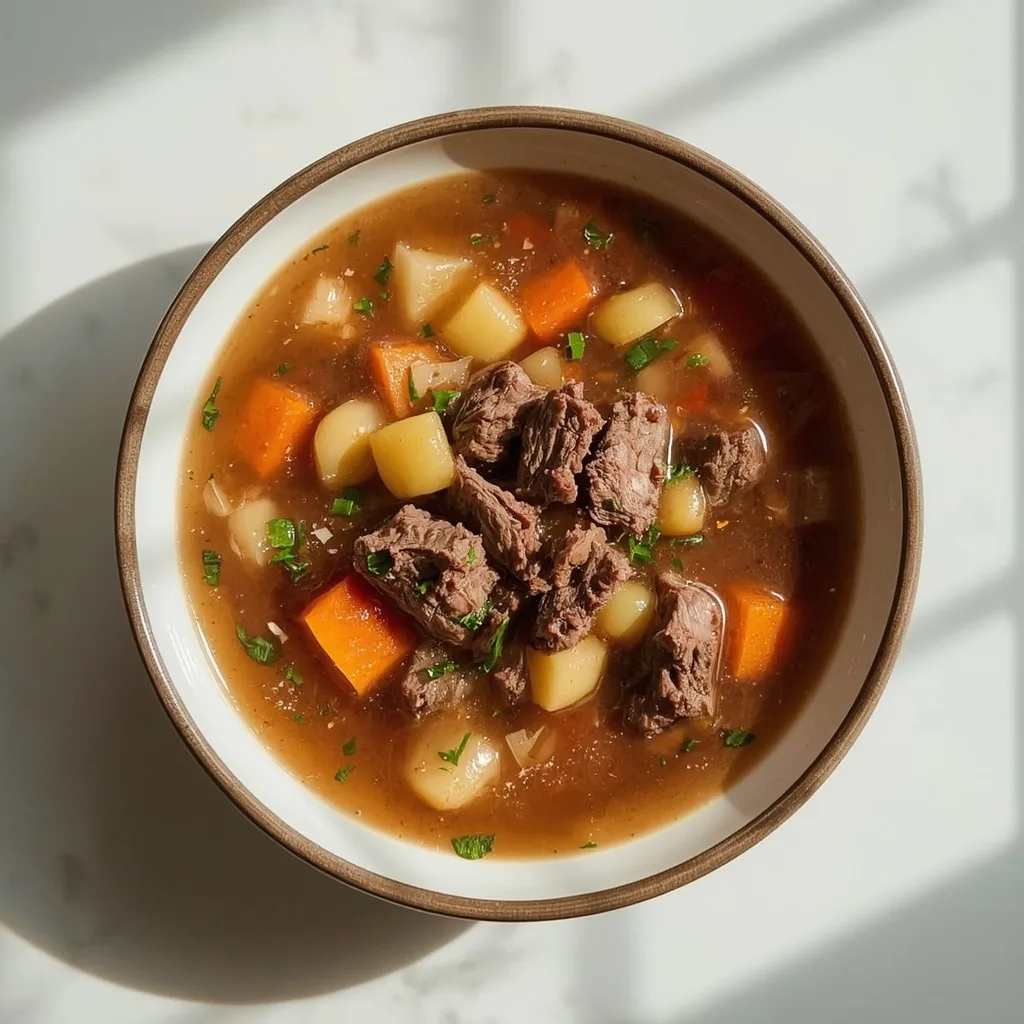
- Finish and serve — Remove the bay leaves and discard. Taste the broth and adjust seasoning with additional salt or pepper if needed — note that the Worcestershire and broth already contribute saltiness. Ladle the soup into bowls, garnish each with a sprinkle of fresh parsley, and serve hot.
Common Mistakes I Made (And How I Fixed Them)
I have made this soup more times than I can count, and I have definitely tripped up a few times. Here is what went wrong and how I fixed it.
- Skipping the sear on the leftover prime rib — I used to just toss the cubes into the broth, and the soup tasted flat. Now I always sear them first to develop that deep browned flavor.
- Crowding the pot during searing — The meat steamed instead of browning because I piled it all in at once. I now sear in two batches if needed — the extra few minutes are worth it.
- Using a full rolling boil — The beef turned tough and chewy the first time because I simmered it too vigorously. Gentle simmering keeps it tender.
- Adding salt too early — I seasoned the broth before letting it reduce, and it ended up way too salty. Now I taste and adjust only at the end.
- Forgetting to scrape the fond — I skipped the deglazing step once, and all that flavor stayed stuck to the pot. Always scrape every browned bit into the liquid.
Best Tips for Pioneer Woman Prime Rib Soup Success
These small adjustments will take your soup from good to great. Each one addresses a common pitfall.
- Sear the meat in batches — If you crowd the pot, the beef releases steam and never gets properly brown. A single layer with space between cubes gives you that deep crust.
- Use a dry red wine — Cabernet Sauvignon or Merlot work well. Sweet wines like Riesling throw off the balance and make the soup taste syrupy.
- Simmer gently — a rolling boil can toughen the beef — After adding the meat back, keep the heat low enough that only a few bubbles break the surface. That gentle heat lets flavors meld without damaging the texture.
- Taste before adding salt — Beef broth and Worcestershire sauce both bring salt. Wait until the soup has simmered for at least 15 minutes before you decide whether it needs more.
- For extra depth, add a splash of balsamic vinegar at the end — A teaspoon stirred in just before serving brightens the whole bowl without making it taste vinegary.
- Let the soup rest off heat for 5 minutes before serving — This allows the flavors to settle and the fat to slightly separate, making it easier to skim if you want a leaner broth.
Best Ingredient Swaps for Pioneer Woman Prime Rib Soup
Need to adapt this recipe to what you have on hand? These swaps work without compromising the overall flavor.
- Leftover roast beef or steak — Not all beef is prime rib. Use any well-roasted beef, like sirloin or eye of round, cut into cubes. Tougher cuts benefit from the 20-minute simmer.
- Beef broth instead of low-sodium — If you only have regular broth, reduce the added salt to 1/4 teaspoon and adjust later.
- Red wine vinegar or sherry — If you do not drink wine, use 2 tablespoons of red wine vinegar plus 1/4 cup extra broth. The acidity still brightens the broth.
- Fresh thyme for dried — Use 1 tablespoon of fresh thyme leaves instead of 1 teaspoon dried. Add it with the garlic for the best flavor.
- Gluten-free Worcestershire — Some Worcestershire sauces contain gluten. Choose a certified gluten-free brand if needed.
Delicious Variations to Try
Once you have mastered the basic soup, these variations keep things interesting. Each one changes the character without adding much work.
- Mushroom and herb version — Add 8 ounces of sliced cremini mushrooms with the onions. Stir in 1 teaspoon of fresh rosemary along with the thyme for an earthier profile.
- Spicy Southwest style — Add 1 diced jalapeño (seeds removed) with the aromatics, and swap 1 cup of broth for fire-roasted diced tomatoes. Top with cilantro instead of parsley.
- Creamy white bean addition — Stir in one can of drained and rinsed cannellini beans during the last 5 minutes of simmering. They add body and extra protein.
- Root vegetable medley — Replace the celery with 1/2 cup diced parsnip and add 1/2 cup diced turnip along with the carrots for a sweeter, heartier soup.
- Garlic and thyme overload — Double the garlic to 6 cloves and add 1 additional teaspoon of dried thyme for a boldly aromatic version.
How to Store Leftovers Properly
Proper storage keeps the soup tasting fresh for days. Follow these methods to avoid soggy vegetables or dry beef.
- Cool completely before storing — Let the soup sit at room temperature for no more than 30 minutes, then refrigerate. Hot soup can raise the temperature of your fridge and spoil other items.
- Airtight container in the fridge — Transfer the soup to a glass or plastic container with a tight lid. It stays good for up to 4 days.
- Freeze in individual portions — Portion the soup into freezer-safe bags or containers, leaving 1 inch of headspace. Label with the date and use within 3 months for best quality.
How to Reheat Pioneer Woman Prime Rib Soup
Reheating gently is key to keeping the beef tender and the vegetables intact. Here are the best methods.
- Stovetop — Pour the soup into a saucepan and warm over medium-low heat, stirring occasionally, for 5 to 7 minutes until steaming. Do not let it boil — high heat can toughen the meat again.
- Microwave — Place a single serving in a microwave-safe bowl, cover loosely with a damp paper towel, and heat on medium power in 1-minute bursts, stirring between each, until hot. This usually takes 2 to 3 minutes.
- Slow cooker — For a larger batch, reheat in a slow cooker on low for 1 to 2 hours. Stir once midway to redistribute the broth and beef.
Nutritional Breakdown (Per Serving)
This recipe makes 4 servings. Here is what you get in each bowl.
- Calories: 380
- Protein: 25g
- Fat: 25g
- Carbohydrates: about 10g
- Fiber: around 1g
- Sugar: roughly 2g
- Sodium: 1100mg
FAQs
Can I freeze Pioneer Woman Prime Rib Soup?
Yes, it freezes beautifully. Let it cool completely, then portion into freezer-safe containers, leaving headspace for expansion. It keeps for up to 3 months.
Can I make this soup without red wine?
Absolutely. Replace the wine with an equal amount of low-sodium beef broth plus 1 teaspoon of red wine vinegar for acidity. The flavor will be slightly less complex but still good.
What is the best cut of beef for this soup if I do not have prime rib?
Any leftover roast beef works, especially chuck roast or sirloin. Avoid deli-style roast beef — it is too lean and will turn rubbery during simmering.
How do I prevent the beef from getting tough?
Keep the heat gentle after adding the beef back to the pot. A rolling boil is the enemy — a low simmer with occasional small bubbles is exactly right.
Can I add potatoes or noodles to Pioneer Woman Prime Rib Soup?
You can, but add them carefully. If using potatoes, dice them small (1/2 inch) and add when you return the beef to the pot. For noodles, cook separately and stir in just before serving to keep them from getting mushy.
Is this soup gluten-free?
As written, yes — none of the ingredients contain gluten. Just double-check your Worcestershire sauce label, as some brands add wheat-based ingredients.
Try These Recipes
Final Words
This Pioneer Woman Prime Rib Soup turns your holiday leftovers into something you will actually look forward to eating again. The broth is rich, the beef stays tender, and the whole thing comes together in under an hour.
Give it a try next time you have leftover prime rib — or even roast beef. One bowl and you will see why this recipe has become a staple in my kitchen.
Pioneer Woman Prime Rib Soup
A hearty, rich soup made from leftover prime rib, simmered in a savory beef broth with aromatic vegetables and a splash of red wine. Tender chunks of beef and a deeply flavored broth make this a comforting meal. Each spoonful is packed with robust meaty flavor and satisfying texture.
SAVE THIS RECIPE!
Get this sent to your inbox, plus get new recipes from us every week!
INGREDIENTS
INSTRUCTIONS
-
1
Heat olive oil in a large Dutch oven or heavy-bottomed pot over medium-high heat until shimmering. Add the prime rib cubes in a single layer, without crowding, and sear undisturbed for 2 to 3 minutes until deeply browned. Use tongs to turn and brown the remaining sides, then transfer the meat to a plate; this builds a rich fond on the pot bottom that will flavor the soup.
-
2
Reduce the heat to medium and add the onion, carrots, and celery. Cook, stirring occasionally, for 5 to 7 minutes until the vegetables have softened and the onion is translucent, scraping up any browned bits from the searing step. Add the garlic and thyme and cook for 1 minute until fragrant, stirring constantly to prevent burning.
-
3
Pour in the red wine and deglaze the pot by scraping the bottom with a wooden spoon to release all the caramelized bits. Let the wine simmer and reduce by half, about 2 minutes, which concentrates its flavor and mellows the alcohol. Add the beef broth, Worcestershire sauce, bay leaves, salt, and pepper, then bring the liquid to a boil.
-
4
Return the seared prime rib along with any accumulated juices to the pot. Reduce the heat to low, cover, and simmer gently for 20 minutes to meld the flavors without overcooking the meat. Avoid a rolling boil, which can toughen the beef; a gentle simmer is signaled by occasional small bubbles breaking the surface.
-
5
Remove the bay leaves and discard. Taste the broth and adjust seasoning with additional salt or pepper if needed — note that the Worcestershire and broth already contribute saltiness. Ladle the soup into bowls, garnish each with a sprinkle of fresh parsley, and serve hot.
NUTRITION
Calories: 380kcal | Carbohydrates: 10g | Protein: 25g | Fat: 25g | Sodium: 1100mg | Fiber: 1g | Sugar: 2g
Nutrition information is automatically calculated, so should only be used as an approximation.