
Pioneer Woman Stuffed Cabbage Recipe

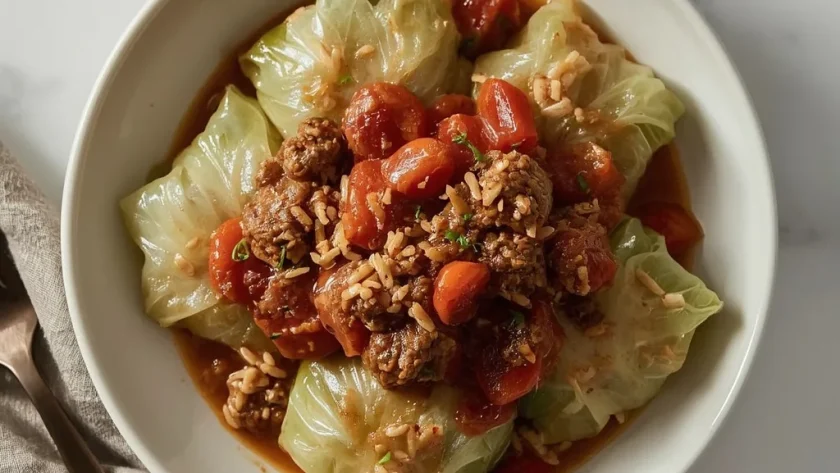
I still remember the first time I tackled a batch of Pioneer Woman Stuffed Cabbage. The idea of boiling an entire head of cabbage, peeling off those leaves, and rolling them around a beef and rice filling felt like a real kitchen project. But the sweet-and-sour tomato sauce that simmers everything together — that is the payoff that makes every step worth it.
This dish lands somewhere between hearty weeknight dinner and Sunday supper. With a total time of about 1 hour 45 minutes, it fills your kitchen with that rich, homey smell that says something good is happening. Savory ground beef, tender cabbage, and a tangy sauce come together in a single pot — classic American comfort food at its most rewarding.
What are Pioneer Woman Stuffed Cabbage?
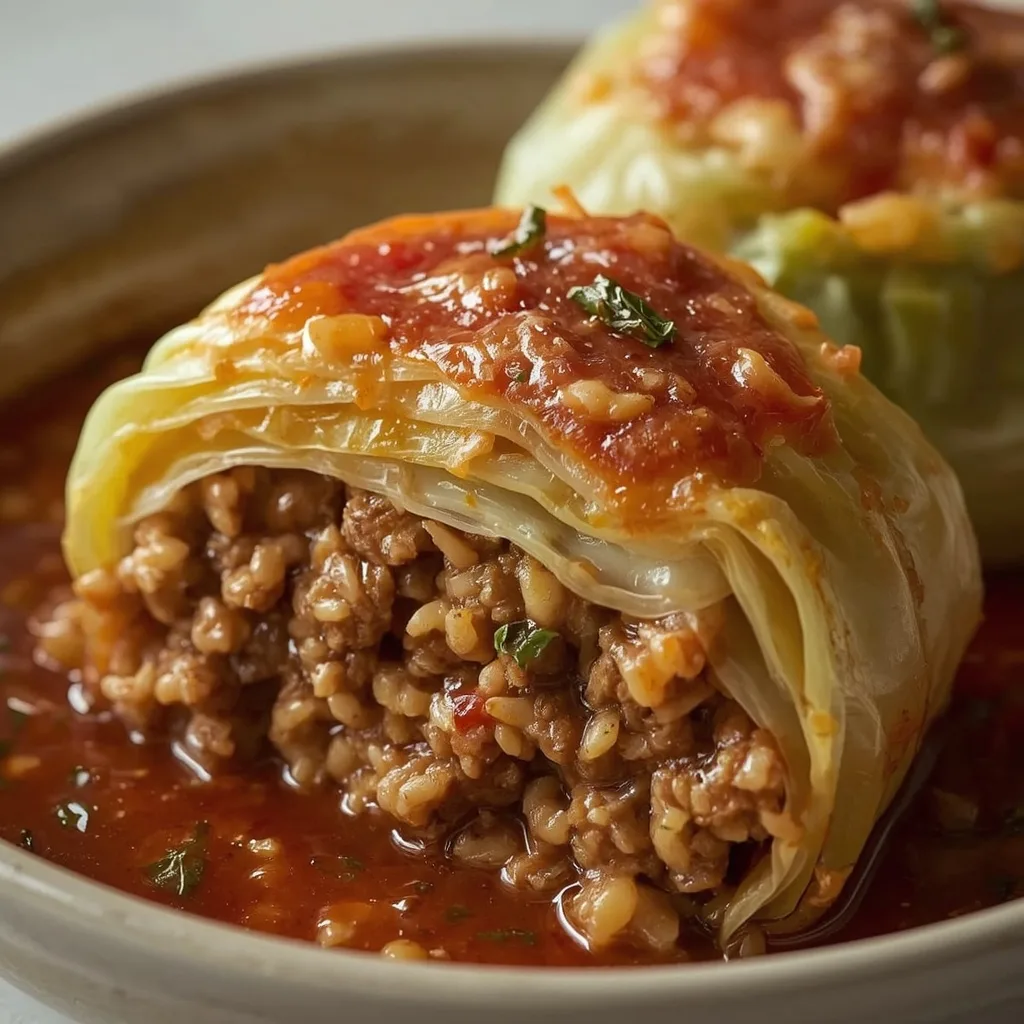
These are tender cabbage leaves wrapped around a savory filling of ground beef and cooked rice, then simmered in a sweet-and-sour tomato sauce until everything is meltingly tender. The sauce — made from tomato sauce, diced tomatoes, brown sugar, and apple cider vinegar — gives the rolls that tangy-sweet balance that makes the dish memorable. Each bite gives you soft cabbage, juicy meat, and a sauce that soaks into the rice. It is old-fashioned cooking that simply works.
Why You’ll Love This Recipe
Here is what I appreciate most about this dish after making it a handful of times.
- One-pot convenience — The entire dish comes together in a single Dutch oven, from searing to baking. Less cleanup, more flavor.
- Sweet-and-sour sauce that delivers — The combination of brown sugar and apple cider vinegar creates a balanced tang that cuts through the richness of the beef beautifully.
- Make-ahead friendly — You can assemble the rolls a day ahead and refrigerate them, then add the sauce and bake when you are ready. Perfect for busy schedules.
- Freezer stable — Both unbaked and baked rolls freeze well for up to 3 months. Double the batch and save one for later.
- Customizable filling — The beef-and-rice base welcomes swaps. Ground pork, turkey, or even lentils work if you want to change things up.
- Comfort food that feeds a crowd — Four generous servings come from one batch, and leftovers taste even better the next day.
Essential Ingredients for Pioneer Woman Stuffed Cabbage
Most of these ingredients are pantry staples, so you likely have many of them already.
- 1 large head green cabbage (about 2 lb / 900g) — The main wrapper. Look for a heavy, dense head with no wilted outer leaves. Savoy cabbage makes an even easier substitute if you find it.
- 1 lb (454g) ground beef (80% lean) — 80% lean gives enough fat for juicy rolls without making the dish greasy. Leaner beef will produce drier filling.
- 1 cup cooked white rice (from 1/3 cup uncooked, cooled) — The rice stretches the filling and adds a soft texture. Make sure it is completely cooled so it does not cook the egg when mixing.
- 1/2 cup onion, finely diced — Small dice ensures the onion cooks through during baking without leaving crunchy bits. Yellow or sweet onion both work here.
- 2 cloves garlic, minced — Fresh garlic beats jarred every time for that pungent, aromatic kick.
- 1 large egg — Binds the filling together so the rolls hold their shape during searing and baking.
- 1 teaspoon kosher salt, plus more for seasoning — Kosher salt dissolves evenly. Season the cabbage cooking water generously, too.
- 1/2 teaspoon black pepper — Freshly ground gives more punch than pre-ground.
- 1 can (15 oz / 425g) tomato sauce — Forms the base of the sauce. No need for seasoned varieties here — plain tomato sauce lets the brown sugar and vinegar shine.
- 1 can (14.5 oz / 411g) diced tomatoes, undrained — Adds texture and body. The juices contribute to the sauce volume, so do not drain them.
- 2 tablespoons brown sugar, packed — Provides the sweet side of the sweet-and-sour duo. Dark brown sugar gives a deeper molasses flavor.
- 2 tablespoons apple cider vinegar — The sour counterpart. Rice vinegar works in a pinch, but apple cider vinegar has a fruitier tang.
- 1 tablespoon Worcestershire sauce — Adds umami depth. It is not traditional in every stuffed cabbage recipe, but it rounds out the sauce nicely.
- 2 tablespoons olive oil — For searing the rolls. Vegetable or canola oil work just as well here.
- For serving: sour cream or fresh parsley (optional) — A dollop of sour cream cuts the acidity, while parsley adds freshness. Both optional but worth having.
Equipment You’ll Need
A few key tools make this process smoother. Here is what I reach for every time.
- Large pot for boiling cabbage — You need enough room to submerge the whole head. A stockpot or large pasta pot works perfectly.
- Large oven-safe Dutch oven or heavy pot — This is your main cooking vessel. A 5- to 6-quart Dutch oven holds all the rolls and sauce comfortably. If yours lacks a tight lid, seal with foil first.
- Paring knife — For coring the cabbage and shaving down the thick center ribs of each leaf. A sharp one makes the job much easier.
- Cutting board — Space to lay out leaves and roll them. A wooden or plastic board both work.
- Medium mixing bowl — For combining the filling ingredients. A glass or stainless steel bowl is fine.
Instructions to Make Pioneer Woman Stuffed Cabbage
These steps look long written out, but each one moves quickly. Take them one at a time and you will be fine.
- Preheat and parboil the cabbage — Preheat your oven to 375°F / 190°C. Bring a large pot of salted water to a boil. Core the cabbage with a small knife, then submerge it in the boiling water. Boil for 8-10 minutes, turning occasionally, until the outer leaves are pliable and translucent. Transfer the cabbage to a colander and run under cold water to stop cooking. Carefully peel off 12 large leaves, keeping them intact. If the leaves are thick, lay them flat and shave down the center rib with a paring knife to make rolling easier.
- Make the filling — In a large mixing bowl, combine the ground beef, cooked rice, diced onion, minced garlic, egg, 1 teaspoon kosher salt, and black pepper. Mix gently with your hands until just combined; overworking will make the filling dense. Portion the mixture into 12 equal mounds, about 1/3 cup each.
- Roll the cabbage wraps — Lay one cabbage leaf flat on a cutting board with the stem end facing you. Place one mound of filling at the base of the leaf. Fold the sides over the filling, then roll firmly away from you into a neat cylinder, tucking the sides as you go. Repeat with remaining leaves and filling. If any leaves tear, double them up for a secure wrap.
- Make the sweet-and-sour sauce — In a medium bowl, whisk together the tomato sauce, diced tomatoes with their juices, brown sugar, apple cider vinegar, and Worcestershire sauce. Taste and adjust seasoning with a pinch of salt and pepper if desired. Set the sauce aside.
- Sear the cabbage rolls — Set a large oven-safe Dutch oven or heavy pot over medium-high heat and add the olive oil. When the oil shimmers and flows like water, carefully place half of the cabbage rolls seam-side down in a single layer. Sear for 2-3 minutes per side until deep golden brown, then transfer to a plate. Repeat with remaining rolls. This step builds a rich, caramelized flavor, but you may skip it if short on time.
- Assemble and bake — Return all cabbage rolls to the pot, arranging them in a single layer if possible (crowding is fine). Pour the prepared sauce evenly over the rolls, making sure each is coated. Cover the pot with a tight-fitting lid. If your lid is not tight, seal with a sheet of foil before covering. Transfer the pot to the preheated oven and bake for 1 hour 15 minutes, or until the cabbage is tender when pierced with a fork and the filling reaches an internal temperature of 160°F / 71°C. If you prefer a thicker sauce, remove the lid for the last 15 minutes of baking to reduce slightly.
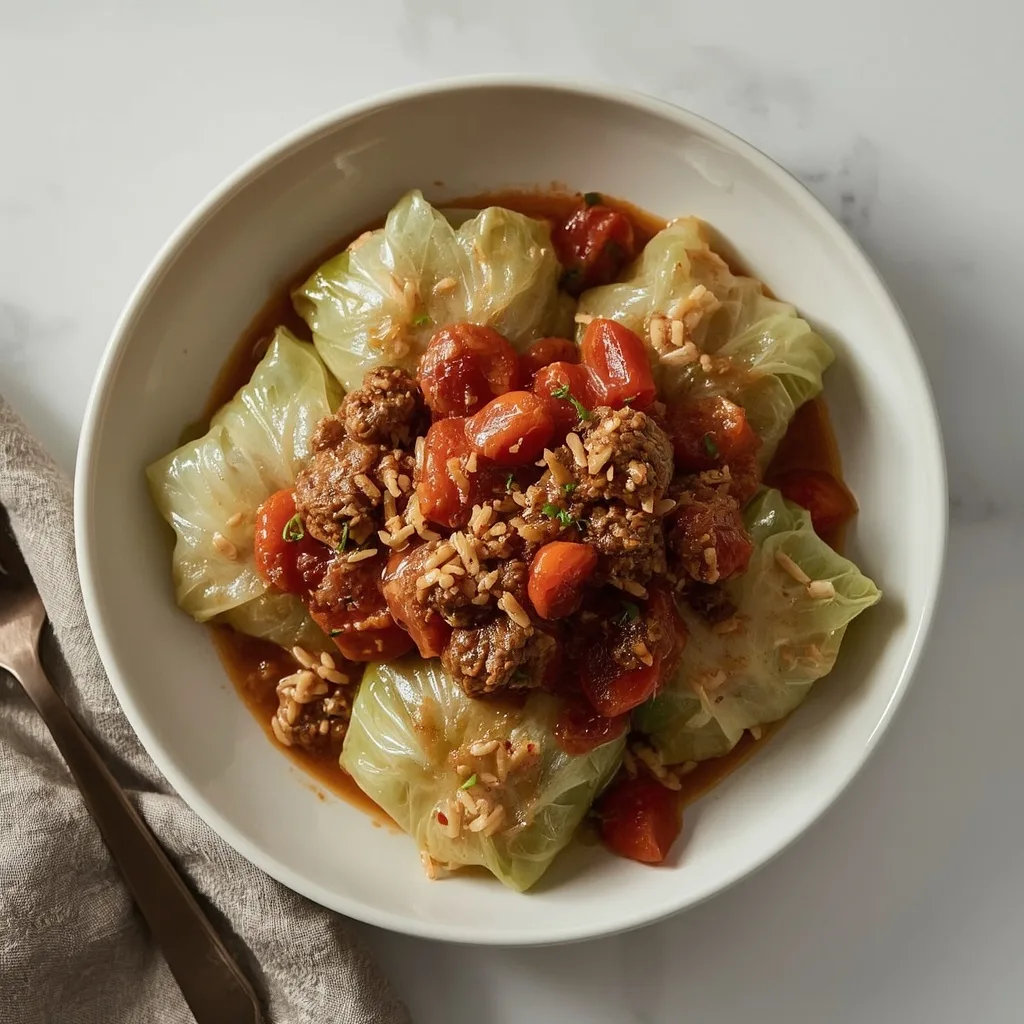
- Rest and serve — Remove the pot from the oven and let the cabbage rolls rest, uncovered, for 10 minutes. The resting time allows the sauce to settle and the rolls to firm up for easier serving. Spoon some sauce over each roll when plating. Garnish with a dollop of sour cream or a sprinkle of fresh parsley if desired.
Common Mistakes I Made (And How I Fixed Them)
I have ruined plenty of cabbage rolls over the years. Here is what tripped me up the most and how I fixed each one.
- Not shaving the cabbage rib — The thick center rib made my first batch tear open during baking. Now I always lay the leaf flat and slice away the raised part of the rib with a paring knife. The leaf rolls smoothly and stays sealed.
- Overmixing the filling — I used to mix the meat, rice, and egg like I was kneading dough. The result was dense, tough rolls. Now I mix gently with my hands until everything is just combined. The difference in texture is huge.
- Skipping the sear — The first time I made this, I skipped browning the rolls to save time. The flavor was flat. That caramelized crust from a quick sear adds depth you simply cannot get from baking alone. I only skip it now if I am truly pressed for time.
- Undercooking the cabbage leaves — Parboiling for only 5 minutes left the leaves stiff and hard to roll. The full 8-10 minutes makes them pliable and translucent. If they still feel firm at the stem end, give them another 2 minutes.
- Using a loose lid — My Dutch oven lid does not seal perfectly, so moisture escaped and the sauce reduced too fast. Now I cover with foil first, then put the lid on. The rolls stay tender and the sauce stays saucy.
Best Tips for Pioneer Woman Stuffed Cabbage Success
Small details make a real difference here. These tips come from trial and error.
- Cool the rice completely before mixing — Warm rice will start cooking the egg when you add it, which can make the filling gluey. Spread cooked rice on a plate and let it sit for 10-15 minutes before mixing.
- Salt the cabbage boiling water generously — The cabbage absorbs salt as it parboils. If the water is under-seasoned, the rolls taste bland even with the sauce. Use about 1 tablespoon of salt per gallon of water.
- Portion the filling with a measuring cup — Eyeballing leads to uneven rolls. A 1/3-cup scoop gives you 12 identical mounds, which means even cooking and a prettier final dish.
- Double up torn leaves without hesitation — If a leaf rips during peeling, do not toss it. Use two overlapping leaves for that roll. The filling stays inside, and nobody notices after baking.
- Let the rolls rest before serving — The 10-minute rest is not optional. The rolls firm up as they cool slightly, and the sauce thickens a bit. Cutting into them immediately will make them fall apart.
- Taste the sauce before pouring — Every can of tomato sauce and batch of brown sugar has slight variation. A quick taste lets you adjust the salt or vinegar balance before it goes into the oven.
- Use Savoy cabbage if you can find it — Savoy leaves are naturally thinner and more tender, which makes rolling easier and cuts cooking time by about 10 minutes. Regular green cabbage works great, but Savoy is a treat.
Best Ingredient Swaps for Pioneer Woman Stuffed Cabbage
Maybe you are out of something, or maybe you just want to try a different spin. These swaps all work.
- Ground pork instead of beef — Replace the ground beef with ground pork for a richer, slightly sweeter filling. Pork has more fat, so the rolls stay extra moist. Drain any excess grease after searing.
- Cauliflower rice for white rice — For a lower-carb version, use 1 cup of riced cauliflower (raw, squeezed dry) in place of the cooked rice. The texture is a bit less fluffy but the flavor holds up well.
- Maple syrup for brown sugar — Swap the brown sugar with 2 tablespoons of pure maple syrup. You lose the molasses note but gain a milder sweetness that pairs nicely with the vinegar.
- Fresh tomatoes for canned diced — If you have ripe garden tomatoes, peel and dice 2 medium tomatoes and use them with their juices instead of the canned version. The sauce will be brighter and more seasonal.
- Turkey for leaner meat — Ground turkey (93% lean) cuts the fat to about 18g per serving. Add 1 tablespoon of olive oil to the filling to keep it from drying out.
- Red wine vinegar for apple cider vinegar — Run out of apple cider vinegar? Red wine vinegar gives a sharper tang. Use 1 1/2 tablespoons instead of 2 to start, then adjust to taste.
Delicious Variations to Try
Once you have the basic method down, these variations keep the dish interesting across different seasons and cravings.
- Spicy harissa version — Stir 1-2 tablespoons of harissa paste into the tomato sauce before pouring it over the rolls. The smoky heat pairs beautifully with the sweet-and-sour base. Serve with a dollop of yogurt.
- Herb and lemon filling — Add 1/4 cup chopped fresh dill and the zest of 1 lemon to the beef-and-rice mixture. Lemon brightens the whole dish, and dill feels classic and fresh.
- Smoky bacon twist — Cook 4 strips of bacon until crisp, crumble them, and mix half into the filling. Sprinkle the remaining bacon over the rolls before serving. The smoky saltiness deepens every bite.
- Greek-inspired rolls — Swap the Worcestershire sauce for 1 teaspoon of dried oregano and add 1/4 cup crumbled feta to the beef mixture. Use the same tomato sauce but omit the brown sugar for a more savory finish.
- Mushroom and lentil vegetarian version — Replace the beef with 1 cup cooked brown lentils and 1 cup finely chopped mushrooms sautéed in olive oil. The lentils mimic the texture of meat, and mushrooms add umami. Use vegetable broth-based sauce.
How to Store Leftovers Properly
Leftovers keep beautifully, but only if you store them right. Here is what I do.
- Refrigerate in an airtight container — Transfer leftover rolls and sauce to a glass or plastic container with a tight lid. They stay fresh for up to 4 days. Spoon extra sauce over the top before sealing so they do not dry out.
- Freeze unbaked rolls for later — Assemble the rolls, place them on a parchment-lined baking sheet, and freeze until solid. Transfer to a freezer bag or container for up to 3 months. When ready to bake, thaw overnight in the fridge, add the sauce, and bake as directed.
- Freeze baked rolls in sauce — Cool the fully cooked rolls completely, then pack them in a freezer-safe container with the sauce. Freeze for up to 3 months. This option is ideal for quick reheat dinners.
How to Reheat Pioneer Woman Stuffed Cabbage
The sauce is the star when reheating — you want it to stay moist without turning the cabbage to mush. Here are the best methods.
- Oven reheating (recommended) — Place the rolls in a baking dish, cover with foil, and reheat at 350°F / 177°C for about 20 minutes, or until the filling reaches 165°F / 74°C. This method preserves the texture of both the cabbage and the filling best.
- Microwave for speed — Place one or two rolls on a microwave-safe plate, spoon a little sauce over the top, and cover with a damp paper towel. Microwave on high for 2-3 minutes, checking at the halfway point. The cabbage softens further, but the flavor remains intact.
- Stovetop simmer — Transfer the rolls and sauce to a saucepan, cover, and warm over medium-low heat for 10-15 minutes, stirring the sauce gently once or twice. Add a splash of water or broth if the sauce looks thick. This method works well for larger portions.
Nutritional Breakdown (Per Serving)
One serving equals roughly 3 rolls with sauce. These numbers are based on the recipe as written.
- Calories: 500
- Protein: 27g
- Fat: 28g
- Saturated Fat: about 10g
- Carbohydrates: 31g
- Fiber: 2g
- Sugar: 8g
- Sodium: around 860mg
- Cholesterol: roughly 115mg
FAQs
Can I use a different type of cabbage for Pioneer Woman Stuffed Cabbage?
Yes. Savoy cabbage is my top pick because the leaves are thinner and roll more easily. Napa cabbage also works, though the leaves are more delicate and may tear. Stick with green cabbage for the most sturdy, classic result.
Do I have to sear the cabbage rolls before baking?
No, but I strongly recommend it. Searing adds a deep caramelized flavor that baking alone cannot provide. If you are truly short on time, you can skip this step and go straight to assembling in the pot.
How do I prevent the cabbage leaves from tearing?
Shave down the thick center rib with a paring knife before rolling. That single step removes the stiffest part of the leaf and makes it flexible. Also, do not overstuff the rolls — about 1/3 cup filling per leaf is plenty.
Can I make Pioneer Woman Stuffed Cabbage in a slow cooker?
You can. Assemble the rolls and arrange them in the slow cooker. Pour the sauce over the top. Cook on low for 6-7 hours or on high for 3-4 hours. The texture will be softer, but the flavor will still be excellent. Skip the searing step if using a slow cooker.
Why is my filling too dry after baking?
Two likely causes. First, you may have overmixed the filling, which compacts the meat and squeezes out moisture. Second, you might be using very lean ground beef. Stick with 80% lean and mix gently.
How do I thicken the sauce if it is too thin?
Remove the lid during the last 15 minutes of baking to let the sauce reduce. If the rolls are fully cooked and the sauce is still thin, transfer the rolls to a plate, simmer the sauce on the stovetop for 5-7 minutes, then pour it back over.
Try These Recipes
Final Words
Pioneer Woman Stuffed Cabbage is one of those dishes that asks for a bit of hands-on time but rewards you with deep, layered flavor that tastes like a hug in a bowl. The sweet-and-sour sauce, the tender cabbage, the savory filling — every part of it works together. I hope you give it a try and find your own rhythm with rolling and searing. You might just discover a new cold-weather favorite.
Pioneer Woman Stuffed Cabbage
Tender cabbage leaves wrapped around a savory beef and rice filling, simmered in a sweet-and-sour tomato sauce until meltingly tender. This hearty, old-fashioned comfort dish delivers layers of flavor with every bite.
SAVE THIS RECIPE!
Get this sent to your inbox, plus get new recipes from us every week!
INGREDIENTS
- For serving: sour cream or fresh parsley (optional)
INSTRUCTIONS
-
1
Preheat oven to 375°F / 190°C. Bring a large pot of salted water to a boil. Core the cabbage with a small knife, then submerge it in the boiling water. Boil for 8-10 minutes, turning occasionally, until the outer leaves are pliable and translucent. Transfer the cabbage to a colander and run under cold water to stop cooking. Carefully peel off 12 large leaves, keeping them intact. If the leaves are thick, lay them flat and shave down the center rib with a paring knife to make rolling easier.
-
2
In a large mixing bowl, combine the ground beef, cooked rice, diced onion, minced garlic, egg, 1 teaspoon kosher salt, and black pepper. Mix gently with your hands until just combined; overworking will make the filling dense. Portion the mixture into 12 equal mounds, about 1/3 cup each.
-
3
Lay one cabbage leaf flat on a cutting board with the stem end facing you. Place one mound of filling at the base of the leaf. Fold the sides over the filling, then roll firmly away from you into a neat cylinder, tucking the sides as you go. Repeat with remaining leaves and filling. If any leaves tear, double them up for a secure wrap.
-
4
In a medium bowl, whisk together the tomato sauce, diced tomatoes with their juices, brown sugar, apple cider vinegar, and Worcestershire sauce. Taste and adjust seasoning with a pinch of salt and pepper if desired. Set the sweet-and-sour sauce aside.
-
5
Set a large oven-safe Dutch oven or heavy pot over medium-high heat and add the olive oil. When the oil shimmers and flows like water, carefully place half of the cabbage rolls seam-side down in a single layer. Sear for 2-3 minutes per side until deep golden brown, then transfer to a plate. Repeat with remaining rolls. This step builds a rich, caramelized flavor, but you may skip it if short on time.
-
6
Return all cabbage rolls to the pot, arranging them in a single layer if possible (crowding is fine). Pour the prepared sauce evenly over the rolls, making sure each is coated. Cover the pot with a tight-fitting lid. If your lid is not tight, seal with a sheet of foil before covering.
-
7
Transfer the pot to the preheated oven and bake for 1 hour 15 minutes, or until the cabbage is tender when pierced with a fork and the filling reaches an internal temperature of 160°F / 71°C. If you prefer a thicker sauce, remove the lid for the last 15 minutes of baking to reduce slightly.
-
8
Remove the pot from the oven and let the cabbage rolls rest, uncovered, for 10 minutes. The resting time allows the sauce to settle and the rolls to firm up for easier serving. Spoon some sauce over each roll when plating. Garnish with a dollop of sour cream or a sprinkle of fresh parsley if desired.
NOTES
- For the most tender rolls, use Savoy cabbage if available; its thinner leaves roll more easily and cook faster. To save time, prepare the rolls a day ahead and refrigerate, then add sauce and bake as directed. Leftovers keep in the refrigerator for up to 4 days in an airtight container. Freeze unbaked or baked rolls for up to 3 months; thaw overnight in the fridge before reheating. To reheat: cover with foil and bake at 350°F / 177°C for 20 minutes, or microwave individual rolls on high for 2-3 minutes.
NUTRITION
Serving: 1 | Calories: 500kcal | Carbohydrates: 31g | Protein: 27g | Fat: 28g | Saturated Fat: 8g | Cholesterol: 130mg | Sodium: 860mg | Fiber: 2g | Sugar: 8g
Nutrition information is automatically calculated, so should only be used as an approximation.