
Pioneer Woman Corned Beef and Cabbage Recipe

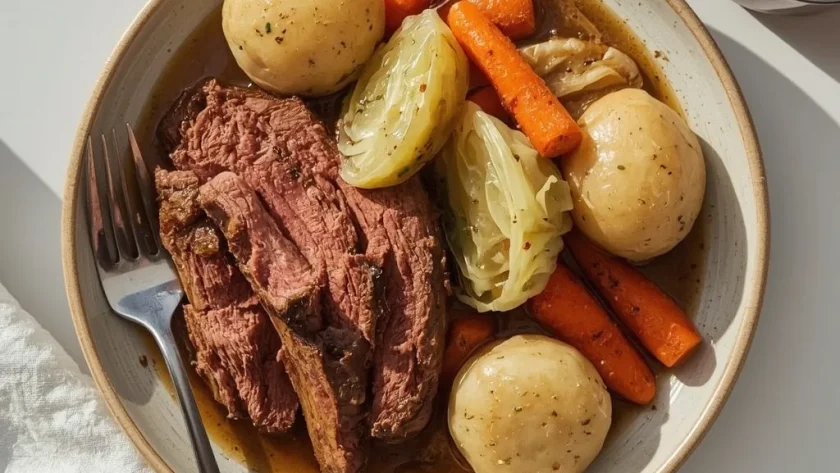
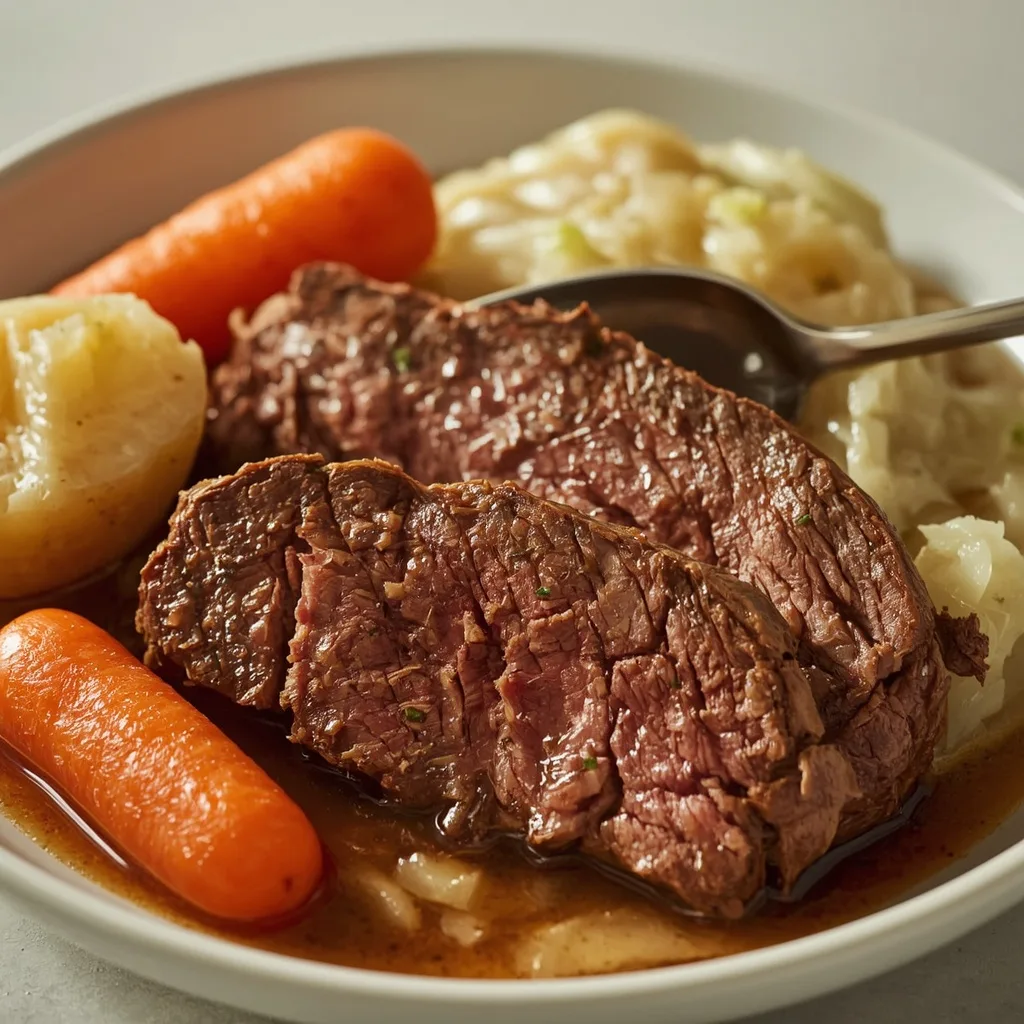
Pioneer Woman Corned Beef and Cabbage is the kind of meal that fills your kitchen with an irresistible savory aroma hours before you even sit down to eat. The brisket braises low and slow until it’s fork-tender, while the surrounding broth transforms into a deeply flavored base for the vegetables.
This Irish-American classic is perfect for St. Patrick’s Day, but it’s hearty enough for any cold-weather Sunday supper. With just 15 minutes of prep and about 3 hours of hands-off simmering, you get a complete meal that feeds four generously.
What are Pioneer Woman Corned Beef and Cabbage?
This dish starts with a 3-pound corned beef brisket, complete with its seasoning packet, that gets gently simmered with bay leaves and peppercorns. The result is meltingly tender meat with a warm, spiced flavor — not at all salty or tough like some versions can be.
Once the brisket is done, the same broth cooks Yukon Gold potatoes, carrot chunks, and green cabbage wedges until they soak up all that savory goodness. The finished platter is simple, satisfying, and practically defines comfort food.
Why You’ll Love This Recipe
- Set-it-and-forget-it cooking — After the initial boil, you simply cover the pot and let it simmer for 2 1/2 to 3 hours. No stirring, no fuss.
- Built-in meal — You cook the vegetables right in the same broth as the beef. That means one pot does almost all the work, and the veggies come out infused with flavor.
- Fork-tender meat every time — The low simmer is the secret. Boiling the brisket makes it tough; a gentle bubble keeps it tender and sliceable.
- Customizable spice level — The recipe uses the included pickling spice packet, but you have full control over extra seasonings if you want more or less heat.
- Great for leftovers — The meat and vegetables store beautifully, and the leftovers make fantastic sandwiches or hash the next day.
Essential Ingredients for Pioneer Woman Corned Beef and Cabbage
You only need ten ingredients here, and most of them are pantry staples.
The Meat and Seasonings
- 1 (3-pound) corned beef brisket, with spice packet — This is the star. Look for a brisket that’s evenly thick so it cooks uniformly. The spice packet is crucial for that classic corned beef flavor.
- 1 tablespoon pickling spice (if not included) — Some briskets don’t come with a packet. If yours is one of them, this adds the same blend of mustard seed, coriander, allspice, and bay.
- 2 bay leaves — They lend a subtle herbal note to the broth. Remove them before serving.
- 1 teaspoon black peppercorns — Whole peppercorns add gentle heat without making the broth cloudy. You’ll want to fish them out later.
The Vegetables
- 4 medium carrots, peeled and cut into 2-inch chunks — Chunking them this size lets them soften without falling apart during the 15-minute simmer.
- 4 medium Yukon Gold potatoes, peeled and halved — Yukon Golds hold their shape well and have a buttery texture that pairs beautifully with the beefy broth.
- 1 small head green cabbage, cut into 8 wedges — Wedges are key here. They stay intact but cook through evenly, and each piece gets that savory broth absorbed into the leaves.
- 2 tablespoons chopped fresh parsley, for garnish — A sprinkle of parsley adds color and a fresh counterpoint to the rich meat and vegetables.
- Coarse kosher salt and freshly ground black pepper, to taste — Go easy on the salt. The brine from the corned beef makes the broth plenty salty on its own.
Equipment You’ll Need
- Large Dutch oven or heavy pot — This is your workhorse. A 6- to 8-quart pot with a tight-fitting lid holds the brisket comfortably and maintains a steady simmer.
- Slotted spoon — Essential for lifting the tender vegetables out of the broth without breaking them apart.
- Cutting board and sharp knife — A sharp chef’s knife makes slicing the rested brisket against the grain clean and easy. A dull blade will shred the meat.
- Foil — You need it to tent the cooked brisket while the vegetables simmer. It keeps the meat warm and prevents it from drying out.
- Measuring cups and spoons — For the water, pickling spice, and peppercorns. Eyeballing these can throw off the salt balance.
Instructions to Make Pioneer Woman Corned Beef and Cabbage
The process is straightforward, but a few moments deserve your attention. Follow these steps in order, and you will get excellent results.
- Rinse and start the brisket — Remove the corned beef from its packaging and rinse under cold water to remove excess brine. Place it fat side up in your Dutch oven. Add the spice packet, bay leaves, and peppercorns, then pour in enough water to cover the meat by one inch.
- Simmer until fork-tender — Bring the pot to a full boil over high heat, then immediately reduce to low so the liquid is at a gentle simmer. Cover tightly and cook for 2 1/2 to 3 hours. A paring knife should slide into the thickest part with little resistance.
- Rest the meat — Carefully transfer the brisket to a cutting board and tent loosely with foil. Let it rest while you cook the vegetables. Skim excess fat from the broth surface if you like, leaving about 2 tablespoons for flavor.
- Cook the potatoes and carrots — Add the carrots and potatoes to the simmering broth. Increase heat to medium-high, bring back to a boil, then reduce to medium-low. Cover and simmer for 15 minutes, until the carrots are just fork-tender.
- Add the cabbage — Nestle the cabbage wedges into the broth around the other vegetables, submerging them as much as possible. Cover and simmer 10 to 15 minutes more, until the cabbage is translucent at the core but still has a little bite.
- Slice the brisket — While the vegetables finish, slice the rested corned beef against the grain into 1/4-inch thick slices. This step is critical — slicing with the grain makes the meat chewy.
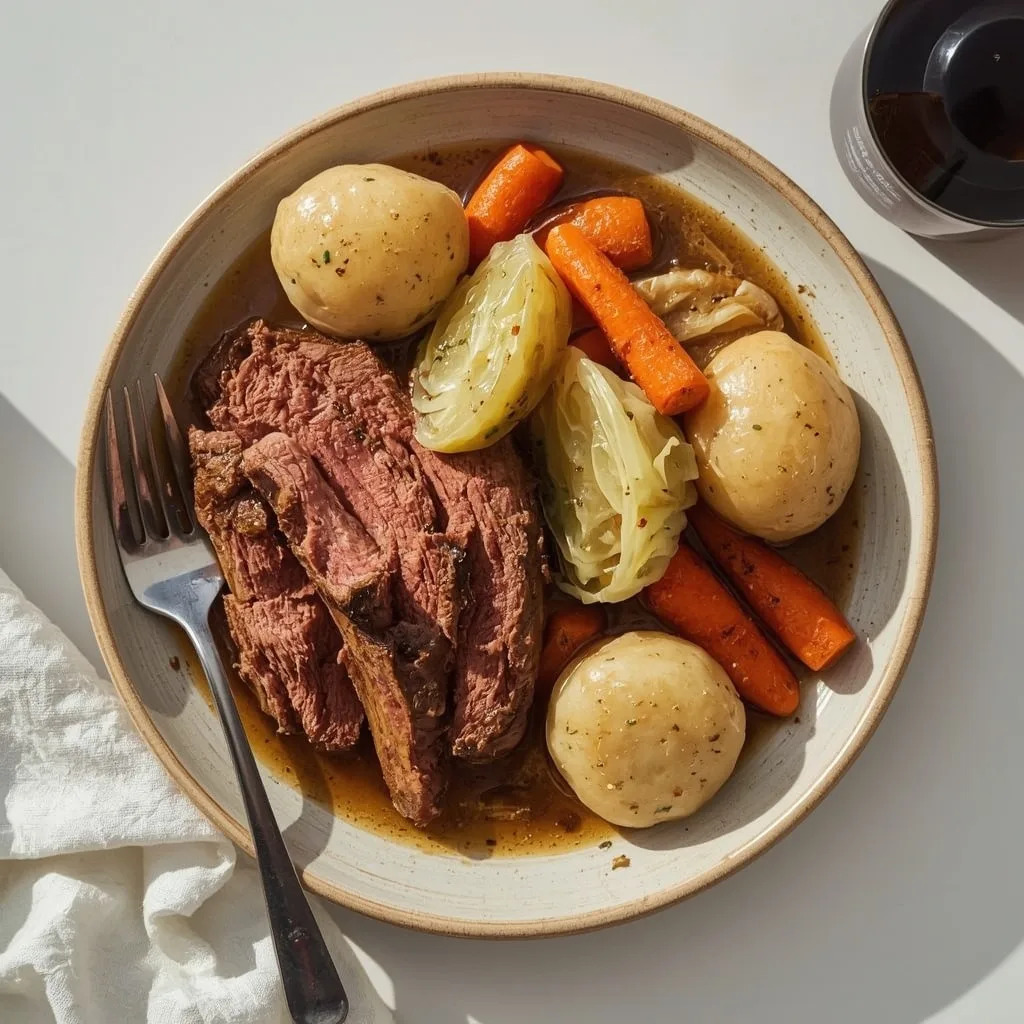
- Arrange and serve — Using a slotted spoon, transfer the carrots, potatoes, and cabbage to a platter around the sliced beef. Ladle a few tablespoons of broth over everything to keep it moist. Discard the bay leaves and peppercorns. Season lightly if needed, garnish with parsley, and serve with extra broth on the side.
Common Mistakes I Made (And How I Fixed Them)
- Letting the pot boil vigorously — I rushed the simmer once, and the brisket came out tough and dry. The fix is simple: keep the heat low enough that you see only small, lazy bubbles breaking the surface.
- Skipping the resting step — I sliced the brisket straight out of the pot, and it fell apart into a pile of shreds. Resting the meat for 10-15 minutes under foil lets the juices redistribute so the slices hold together.
- Overcooking the cabbage — I left the cabbage in the broth for 25 minutes once, and it turned into limp, waterlogged ribbons. Now I pull it out as soon as the core is translucent — about 12 minutes does it.
- Forgetting to skim the fat — The broth can end up greasy if you skip this. Leaving 2 tablespoons adds flavor, but skimming the rest gives you a cleaner, more balanced broth.
- Not tasting before salting — I added salt to the vegetables before tasting the broth, and the whole dish was borderline inedible. The brine from the corned beef makes the broth salty enough — taste first, then add salt only if needed.
Best Tips for Pioneer Woman Corned Beef and Cabbage Success
- Rinse the brisket thoroughly — Running it under cold water removes the surface brine. This simple step prevents the final dish from being overly salty.
- Keep the pot covered — Every time you lift the lid, steam escapes and the temperature drops. A tight lid maintains a steady simmer, which is what makes the meat tender.
- Cut the cabbage into wedges, not shreds — Wedges hold their shape during cooking and absorb just enough broth to soften without turning mushy. Shredded cabbage would disintegrate.
- Test the brisket with a paring knife — A fork works too, but a thin knife slides in with less resistance and tells you exactly when the meat is fork-tender. If the knife meets any resistance, give it another 15 minutes.
- Slice against the grain — Look at the lines of muscle fiber running through the brisket and cut perpendicular to them. This shortens the fibers, making each bite tender instead of stringy.
- Warm your serving platter — A cold plate will cool the meat and vegetables down quickly. Run the platter under hot water and dry it just before you plate. It makes a noticeable difference.
Best Ingredient Swaps for Pioneer Woman Corned Beef and Cabbage
- Low-sodium beef broth instead of water — Replace the 4 cups of water with low-sodium beef broth for a richer, beefier broth. Be extra careful with added salt, as the broth will already have some sodium.
- Red potatoes instead of Yukon Golds — Red potatoes have a waxy texture that holds up well during simmering. They won’t get as creamy as Yukon Golds, but they stay intact nicely.
- Savoy cabbage instead of green cabbage — Savoy has crinkly, tender leaves that cook more quickly than standard green cabbage. Reduce the final simmer time by about 5 minutes to avoid overcooking.
- Turnips instead of potatoes — For a lower-carb option, replace the potatoes with peeled turnips cut into similar-sized chunks. They’ll absorb the broth flavor well and have a mild, slightly peppery taste.
- Fresh thyme instead of parsley — Add a few sprigs of fresh thyme to the pot during the last 10 minutes of vegetable cooking. It brings an earthy, herbal note that complements the pickling spice.
Delicious Variations to Try
- Broiled corned beef — After slicing the rested brisket, arrange the slices in a single layer on a baking sheet and broil for 2-3 minutes until the edges caramelize. The crispy edges add a wonderful texture contrast to the tender vegetables.
- Guinness-braised corned beef — Replace 1 cup of the cooking water with a bottle of stout beer. The Guinness adds depth and a slight bitterness that balances the richness of the meat.
- Spicy corned beef — Add one halved jalapeño or serrano pepper to the pot along with the pickling spice. The heat infuses the broth gently — it’s noticeable but not overwhelming.
- Horseradish cream on the side — Mix 1/2 cup sour cream with 2 tablespoons prepared horseradish, a squeeze of lemon juice, and a pinch of salt. Serve it alongside the platter for dipping the beef and potatoes.
- Leftover corned beef hash — The next day, dice leftover corned beef and potatoes, then pan-fry them in butter until crispy. Serve with fried eggs for an incredible breakfast.
How to Store Leftovers Properly
- Separate the meat from the broth — Slice the leftover corned beef and wrap it tightly in plastic wrap or aluminum foil. Store the vegetables in a separate airtight container. The broth should go into its own container. This prevents the meat from getting waterlogged.
- Refrigerate for up to 4 days — Place the wrapped meat and containers in the refrigerator. The meat will stay tender for several days if it’s sealed tightly. Label the containers with the date so you don’t lose track.
- Freeze for up to 2 months — For longer storage, pack the sliced meat in a freezer-safe bag, pressing out as much air as possible. The vegetables freeze less well — they’ll turn mushy upon thawing — so consider using them first.
How to Reheat Pioneer Woman Corned Beef and Cabbage
The best way to reheat depends on what you are warming up and how quickly you need it.
- Stovetop method — Place the sliced meat and vegetables in a covered skillet with a splash of the reserved broth. Heat over medium-low heat for 5-7 minutes, turning once, until everything is warmed through. The broth prevents the meat from drying out.
- Microwave method — Arrange slices of corned beef and a portion of vegetables on a microwave-safe plate. Add a tablespoon of broth, cover with a damp paper towel, and microwave on medium power for 1-2 minutes. Check and add 30-second intervals if needed.
- Oven method — Preheat the oven to 300°F. Place the meat and vegetables in an oven-safe dish, add a few tablespoons of broth, and cover with foil. Bake for 10-15 minutes, until hot. This method is gentler than the microwave and keeps the texture better.
Nutritional Breakdown (Per Serving)
This recipe makes 4 generous servings. Here is what you get in each portion.
- Calories: 726
- Protein: 46.9g
- Fat: 36.6g
- Carbohydrates: about 53g
- Fiber: around 4.5g
- Sugar: roughly 6g
- Sodium: 2000mg
FAQs
Can I use a different cut of beef for this recipe?
Brisket is the traditional cut for corned beef because its fat marbling breaks down during long simmering, creating tender meat. A bottom round or eye of round would be much leaner and could dry out. Stick with brisket for the best results.
Do I have to use the spice packet that comes with the corned beef?
That packet contains pickling spice, which is a blend of mustard seed, coriander, allspice, bay leaves, and red pepper flakes. You can omit it, but the flavor will be noticeably milder. If you do skip it, add the 1 tablespoon of pickling spice listed in the ingredients to maintain the classic taste.
Can I make Pioneer Woman Corned Beef and Cabbage in a slow cooker?
Yes. Place the rinsed brisket in a slow cooker with the spices and enough water to cover it by 1 inch. Cook on low for 8-10 hours. Add the carrots and potatoes during the last 45 minutes, and the cabbage during the last 20 minutes. The flavor will be slightly milder than the stovetop version.
Why is my corned beef tough instead of tender?
Two things cause toughness: boiling the liquid instead of simmering it, or not cooking the meat long enough. The liquid should show only small, gentle bubbles — never a rolling boil. If the meat still resists a knife after 3 hours, continue simmering and check every 15 minutes.
Can I freeze Pioneer Woman Corned Beef and Cabbage?
You can freeze the meat and broth, but the vegetables will become mushy after thawing. Slice the meat, wrap it tightly, and freeze for up to 2 months. The broth freezes well in an airtight container. Thaw both in the refrigerator before reheating.
Try These Recipes
Final Words
Pioneer Woman Corned Beef and Cabbage delivers exactly what a cold-weather meal should: tender meat, flavorful broth, and vegetables that taste of everything they cooked with. The active time is minimal, and the payoff is a dinner that feels special without being complicated.
I hope this guide gives you the confidence to make it for your next St. Patrick’s Day celebration or cozy Sunday supper. Give it a try, and let me know how it turns out in the comments.
Pioneer Woman Corned Beef and Cabbage
Tender, richly spiced corned beef brisket is braised low and slow until fork-tender, then finished with sweet carrots, creamy potatoes, and wedges of cabbage that soak up the savory broth. This classic St. Patrick’s Day supper is hearty, comforting, and perfect for family dinners.
SAVE THIS RECIPE!
Get this sent to your inbox, plus get new recipes from us every week!
INGREDIENTS
INSTRUCTIONS
-
1
Remove the corned beef from its packaging and rinse under cold water to remove excess brine. Place the brisket in a large Dutch oven or heavy pot, fat side up. Add the spice packet (or pickling spice), bay leaves, and peppercorns. Pour in enough water to completely cover the brisket by 1 inch.
-
2
Set the pot over high heat and bring to a full boil, then immediately reduce the heat to low so the liquid is at a gentle simmer. Cover with a tight-fitting lid and cook for 2 1/2 to 3 hours, until the meat is fork-tender — a paring knife should slide in with little resistance. Do not let the liquid boil vigorously, as that will toughen the meat.
-
3
Once the corned beef is tender, carefully transfer the brisket to a cutting board and tent loosely with foil. Let it rest while you cook the vegetables. Skim off any excess fat from the surface of the broth if desired, leaving about 2 tablespoons of fat for flavor.
-
4
Add the carrots and potatoes to the simmering broth. Increase the heat to medium-high and bring back to a boil, then reduce to medium-low, cover, and simmer for 15 minutes, until the carrots are just fork-tender but not mushy.
-
5
Nestle the cabbage wedges into the broth around the carrots and potatoes, submerging them as much as possible. Cover and continue to simmer for 10 to 15 minutes more, until the cabbage is translucent at the core and tender but still with a little bite.
-
6
While the vegetables cook, slice the rested corned beef against the grain into 1/4-inch thick slices. Slicing against the grain ensures the meat stays tender rather than chewy. Arrange the slices on a serving platter.
-
7
Using a slotted spoon, transfer the carrots, potatoes, and cabbage to the platter around the beef. Ladle a few tablespoons of the cooking broth over the meat and vegetables to keep them moist. Discard bay leaves and peppercorns.
-
8
Season the vegetables lightly with kosher salt and pepper if needed — the broth is already salty from the brine. Sprinkle everything with fresh chopped parsley for color and freshness. Serve immediately with extra broth on the side.
-
9
For a crispy variation, after slicing the corned beef, arrange slices in a single layer on a baking sheet and broil for 2-3 minutes until edges caramelize. Serve with vegetables as directed.
-
10
Leftover corned beef and vegetables can be stored separately from the broth. Slice the meat and wrap tightly; refrigerate for up to 4 days or freeze for up to 2 months. Reheat gently in a covered skillet with a splash of broth over medium-low heat.
NOTES
- Do not rush the simmer; low and slow is key for tender corned beef. Use a fork to test tenderness — if it pulls apart easily, it’s ready. Remove the cabbage wedges as soon as they are tender to prevent them from becoming waterlogged and mushy. Always slice the brisket against the grain for the best texture. For richer flavor, substitute water with low-sodium beef broth.
NUTRITION
Serving: 1 | Calories: 726kcal | Carbohydrates: 53g | Protein: 46.9g | Fat: 36.6g | Saturated Fat: 12g | Cholesterol: 160mg | Sodium: 2000mg | Fiber: 4.5g | Sugar: 6g
Nutrition information is automatically calculated, so should only be used as an approximation.